The Other Side of the Desk
What Saudi banks' record first half means if you're the one borrowing
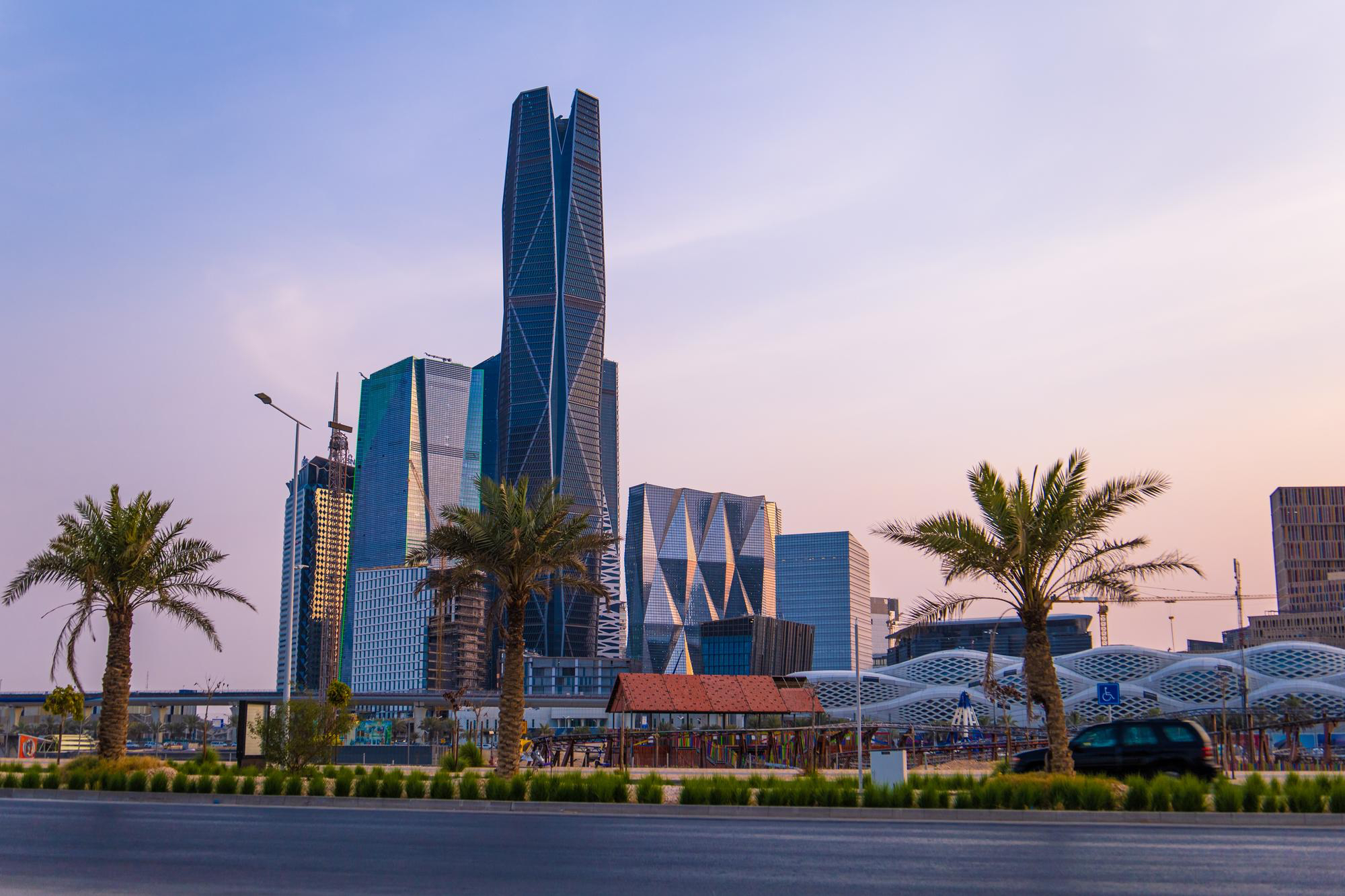
Saudi Arabia's listed banks have recently reported one of their best half-year performances on record. AlRajhi Bank earned SR13.76 billion, surpassing SNB for the first time. Dividendswere increased, and analysts expressed their approval. Consequently, everyheadline interpreted these results as positive news for shareholders. However, we view theseresults differently. A bank's financial results provide detailed public insightinto who can access money in the kingdom, under what conditions, and wherecapital is likely to flow next. For anyone running a business in Saudi Arabia,managing a ministry program, or considering expansion of a family company, thefirst-half disclosures provide answers to questions far more significant thanwhether to purchase bank shares. Unfortunately, very few people read them withthis perspective. This piece aims to highlight that approach.
Context Panel
Jan
TASI opens the year at a seven-year turnover low; credit growth already slowing, deposits outpacing loans
Feb 1
Capital market opens to all foreign investors; QFI regime abolished
Feb
Regional conflict begins to disrupt tourism, shipping and sentiment
Mar
Q1: GDP +3.0%; bank profits a record SR23.95bn (+7.6%); deposits +3.9% vs loans +1.6%; hotel rates −11%
Apr - Jun
War weighs on VC (Saudi H1 funding $259M, second to UAE); banks assessed resilient; TASI slides three straight months
May
Credit SR3.2tn (+6.6% YoY); new mortgages SR4.4bn, weakest May since 2018; POS +6% YoY; Aramco Q1 profit $32bn
Jun
PMI 53.3 (4-month high) but steepest input-cost quarter in 15 years; unemployment a record-low 2.8%
Jul
H1 debt issuance $49.3bn (48% of GCC); sovereign refinances SR17.1bn out to 2041; first-time-buyer mortgage programme launches; H1 bank earnings land
First, the scoreboard
The facts are quickly told. The ten listedbanks collectively earned SR48.8 billion in the first half of the year, largelydue to increased financing income and fees, and lower funding costs. Growthrates varied significantly, ranging from 3.44 percent at SAIB to 14.15 percentat Al Rajhi, with the fastest-growing bank expanding four times as quickly asthe slowest.
One noteworthy result that warrants more attention isBank AlJazira, the smallest bank among the ten in terms of profits, whichachieved 14.10 percent profit growth, just shy of Al Rajhi's growth. This meansthat the two fastest-growing banks in the Kingdom occupy opposite ends of thesize spectrum, highlighting that the winners in this half were not determinedby scale.
TABLE 1 — H1 2026 net profit, listed banks
CHART 1 — Earning more, lending less
The number underneath the number
Let's start with a key figure that much ofJuly's coverage got wrong. Several reports indicated that bank credit was"up 16.2 percent year-on-year" — a figure that actually correspondsto May 2025, not May 2026. According to SAMA's May 2026 bulletin, credit to theprivate sector stands at SR3.2 trillion, reflecting only 6.6 percentyear-on-year growth. The real story lies in this deceleration: credit growthwas consistently between 16 and 18 percent for much of last year, slowed toaround 8 percent by March, and further decreased to 6.6 percent by May, holdingat 6.8 percent in June. From January to May, lending grew by only 2.2 percent,less than half the pace observed during the same period in 2025.
So how did banks report record profits while lendingslowed down significantly? The impact of the slowdown was not evenlydistributed; it mostly affected one type of borrower: households.
CHART 2 — Two borrowers, two directions
In May, new residential mortgages amountedto SR4.4 billion, a significant decrease from SR9.96 billion a year earlier.This marks the weakest performance for May since 2018. In contrast, corporatecredit continues to grow: business lending has increased its share of theoverall loan portfolio for over a year, reaching 55.4 percent of all credit byMay 2025, up from 52.9 percent. Corporate lending is growing at twice the rateof personal lending. The same tilt appears in small-business credit: facilitiesto micro, small and medium enterprises reached SR420.7 billion by mid-2025, up37 percent year on year, with banks providing 94.7 percent of it.
In simple terms, over the past eighteen months, theSaudi financial landscape has gradually shifted from focusing on households toprioritizing businesses. For those selling to consumers, this shift presents ademand challenge that may be evident before it reflects in retail data.Conversely, if you are borrowing as a company, you are now the customer thatbanks are eager to attract.
If you sell to consumers: the early warning
Household credit serves as a leadingindicator of household spending. The recent mortgage collapse has alreadyimpacted the property market, with villa prices dropping by 9.7 percent overthe year ending in June, despite a 1.3 percent increase in the overall realestate index. Moreover, sales data from July has shown weakness across mostcategories. In response, the state has launched a first-time homebuyer program lastmonth "Alternative Financing" with REDF, SNB, and NHC, withinstalments starting at SR699 per month to deliberately revive the mortgagemarket.
While we wouldn't classify this situation as afull-blown consumer downturn just yet—since unemployment remains at a recordlow of 2.8 percent, and summer travel is generating spending that willpartially continue—businesses planning for 2027 based on 2024's credit-drivengrowth expectations may find themselves operating in a market that is no longerrelevant. The reality is that demand is shifting from credit-financed purchasesto consumption based on salaries, and the companies that adapt first will have themost pricing power.
If you borrow: this is the window
For corporate borrowers, the first half ofthe year reflects unusually favorable conditions for three key reasons. First,banks have capital to deploy. Deposits have grown faster than loans in thefirst quarter, with a growth rate of 3.9 percent compared to 1.6 percent forloans. This dynamic has pulled the sector's loans-to-deposits ratio down from106.5 percent to 104.1 percent, according to analysts' definitions. Meanwhile,SAMA’s regulatory ratio, which considers stable funding more broadly, is near79 percent. Both ratios are accurate as they measure different aspects.Additionally, funding costs have eased, and roughly 100 basis points in ratecuts are expected by the end of 2026 as SAMA monitors the Federal Reserve.
Second, this appetite for lending isevident in real transactions, not just aggregate numbers. Recently, SaudiEnergy signed a SR15.8 billion, seven-year unsecured Murabaha facility withseven local banks for general corporate purposes. This indicates that suchfavorable terms are typically offered at the beginning of a lending cycle, notat the end.
Third, banks are not the only players inthe market. Saudi issuers raised $49.3 billion in bonds and sukuk during thefirst half of the year, accounting for 48 percent of all GCC issuance.Corporates, rather than sovereign entities, made up nearly two-thirds of theregion's total. The sovereign itself utilized July to retire SR17.1 billion ofnear-term sukuk while reissuing bonds with maturities extending to 2041,strategically lengthening its debt profile while demand is strong. Companiescan view this as a model for their own funding strategies.
The practical conclusion is this: If your plansinvolve debt, expansion, acquisition, or refinancing, the terms available inthe next two to three quarters are likely to be the best of this cycle. Banksare competing for quality corporate risks precisely because the mortgagesector, which once absorbed their liquidity, has stalled. Opportunities likethis may close without warning.
The overlooked line: your idle cash
One often-overlookedconsequence of the deposit race is that banks now prioritize deposits almost asmuch as they do borrowers. As banks compete for stable funding, term depositshave seen significant growth, particularly with the government's retail sukukprogram offering a rate of 4.70 percent as of August. This rate effectivelyserves as the Kingdom's risk-free retail benchmark, influencing the pricing ofmany financial products. For a corporate treasury maintaining substantialbalances in current accounts, this means they are essentially giving uppotential earnings to their bank. With an average idle balance of SR50 million,the difference between earning zero interest and securing a negotiated depositrate represents a substantial amount of money. In the first half of the year,banks' own results indicate that they are in a position to pay these higherrates. SAMA's June data show the shift is already under way: time and savingsdeposits rose 25 percent year on year to SR1.375 trillion, while demand depositsfell 3.2 percent.
TABLE 2 — What the H1 results say / What we would do
What we would watch in H2
Monthly mortgage issuance
This is the best indicatorof household credit appetite and whether the SR699-a-month program will restartit. If monthly issuance falls below SR5 billion in the second half, it wouldconfirm that the shift in trends is structural rather than seasonal.
Provisions
The cost of risk for thesector was just 0.15% in Q1, with non-performing loans (NPLs) ranging from 0.9%to 1.1%, indicating unusually low risk levels. If provisions increase in Q3, itmay suggest that H1's record profits were inflated due to timing issues.
The MSME experiment
We need to observe whetherMSME growth—37 percent year on year through mid-2025—can sustain itself throughits first challenging quarter or if it was merely a yield trade.
The rate path
Anticipated rate cuts ofabout 100 basis points by the end of 2026 could compress bank margins andfurther reduce corporate debt costs, benefiting borrowers. However, this willpose a challenge for banks' fee income.
SAMA Monthly Statistical Bulletin, May 2026 (system credit SR3.2tn, +6.6% YoY; regulatory LDR ~79%; NPL 1.1%) — as reported in Arab News opinion analysis, 26 Jul 2026
Naif Al-Ghaith, chief economist, Riyad Bank, via Arab News — credit growth ~8% in March 2026 against earlier peaks of 16% and 18%; deposit growth 8.7%
AGBI, "Saudi banks slow lending as PIF cutbacks bite", 3 Jul 2026 (Jan–May credit +2.2% vs +5.4%; May mortgages SR4.4bn, lowest May since 2018; Monica Malik quote)
AGBI, "Saudi lending programme seeks to revive mortgage market", 13 Jul 2026 (May mortgages SR4.4bn vs SR9.96bn a year earlier, a fall of about 56%; REDF/SNB/NHC, SR699/month)
AGBI, "Slower lending unlikely to dent Saudi bank profits", 17 Jul 2026 (NIM outlook; UBS and EFG Hermes)
Arab News, "Saudi banks post strong H1 results", 21 Jul 2026 (bank-by-bank H1 profits; note: its 16.2% credit figure matches May 2025 and is treated as erroneous here)
Arab News / SAMA data, 18 Jul 2025 (business loans 55.35% of credit, corporate +21.7% vs personal +10% — May 2025 composition)
Arab News / SAMA, "SME lending in Saudi Arabia surges past $112bn" (MSME facilities SR420.7bn at end-Q2 2025, +37% YoY, banks providing 94.7%)
Alvarez & Marsal KSA Banking Pulse Q1 2026, via Arab News, 2 Jul 2026 (deposits +3.9%, loans +1.6%, LDR 104.1%, NIM 2.84%, cost of risk 0.15%, NPL 0.9%)
Maaal, "Saudi Banks Q2 2026 net profit rises 8.2% to SR24.9bn", Jul 2026
Tadawul quarterly filings, Q1 and Q2 2026 — Banque Saudi Fransi, Bank AlJazira, SAIB (H1 computed as Q1+Q2; prior-year comparatives from Zawya H1 2025 reports and Argaam Q1 2025)
Argaam, "Saudi Energy signs SAR 15.8B facility with 7 banks", 28 Jul 2026
Arab News / Markaz, "Saudi Arabia raises $49bn in H1 debt issuance", 26 Jul 2026
Arab News, NDMC sukuk redemption/reissuance to 2041, 21 Jul 2026
Arab News, GASTAT REPI Q2 2026 (villas −9.7%, index +1.3%), 20 Jul 2026
Arab News, POS spending week to 11 July 2026 (SR14.2bn, −15.9% week on week, every category down except hotels)
Arab News, "Sah" July issuance at 4.60%, 6 Jul 2026
Arab News, GASTAT labour market (unemployment 2.8%), 14 Jul 2026
Riyad Capital via Argaam (rate path: ~100bps of cuts expected by end-2026; SAIBOR to ~4.35%)
Contributers: