
POS provider
What it sees
- Daily sales
- Ticket size
- Seasonality
- Settlement timing
Financing moment
Short-term working capital against future card receipts

The next phase of SME finance may not be defined by who manufactures the loan, but by who owns the customer relationship at the moment financing is needed
08/10/2026
Saudi MSME credit has more than quadrupled since 2018, but only half the distance to the 2030 target has been covered. Getting the rest of the way is a question of how financing reaches businesses, not how much of it banks can write.
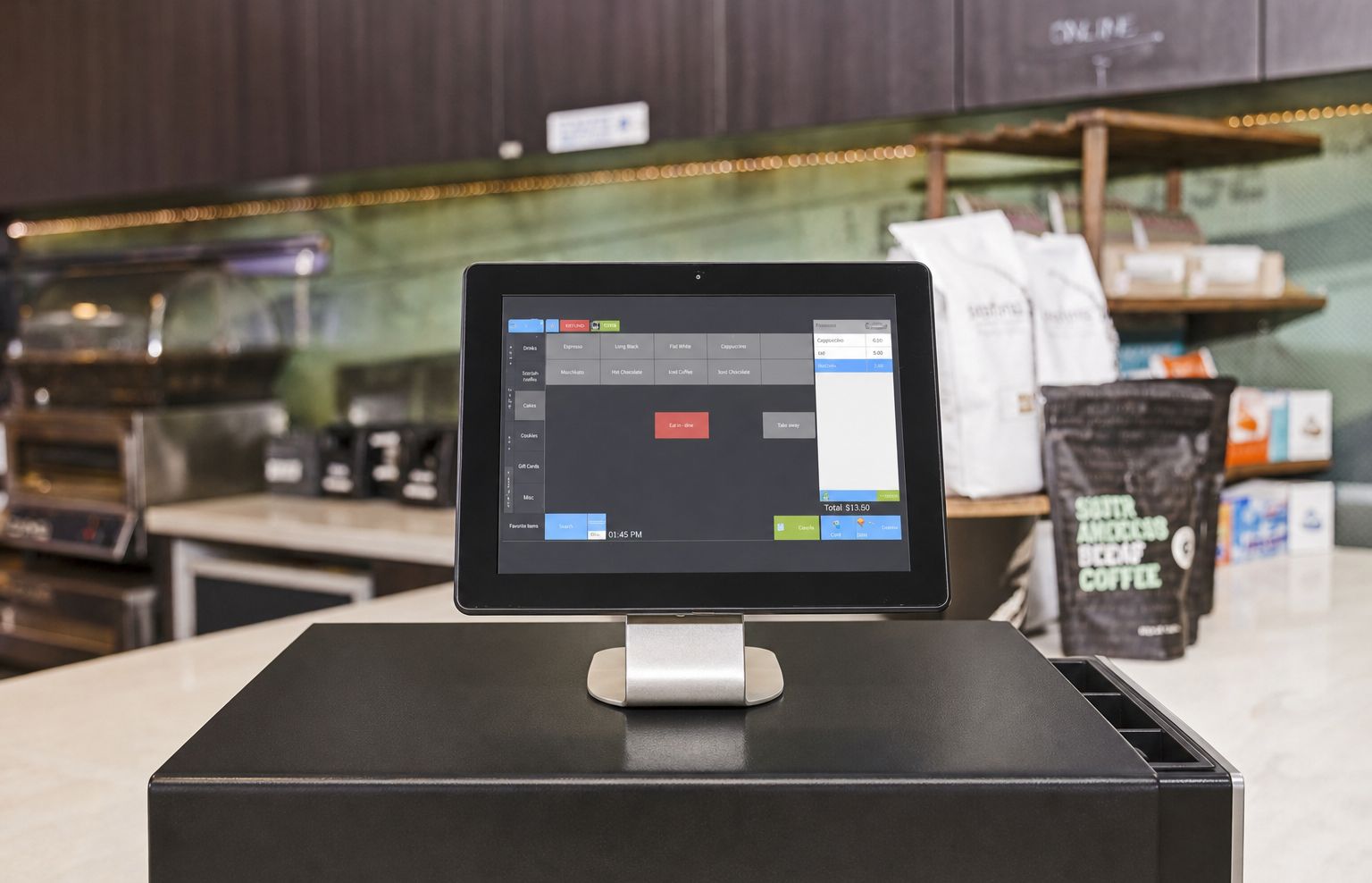
The systems SMEs already work in are becoming the place where credit gets offered. A POS provider, a marketplace, an accounting system or an ERP often sees the need before the owner has thought to ask a bank.
A bank does not have to own the screen to own the loan. The opportunity is to put regulated financing inside the systems businesses already use, and offer it when their own numbers show the need.
For years, embedded finance was largely discussed as a technology story. Banks expose products through APIs. Fintechs connect the infrastructure. Non-financial companies add payments, lending or other financial services into their platforms. That remains true. But a more important shift is happening underneath it.
The businesses gaining strategic importance are the platforms already sitting inside the SME's daily operations: point-of-sale providers, marketplaces, e-commerce platforms, accounting systems, ERPs and other vertical software companies. They are becoming a new financial distribution layer.
For Saudi Arabia, where SME financing is expanding rapidly, that could materially change how businesses access credit.
Saudi Arabia has made real progress in expanding SME financing. By the end of 2025, credit facilities extended to micro, small and medium enterprises reached SAR 468.6 billion, a 33% increase on the year before, and by the first quarter of 2026 the balance stood at SAR 489.2 billion. That is significant movement in a market where access to financing has historically been one of the major constraints facing smaller businesses.
MSME credit has more than quadrupled since 2018, and the pace has stepped up rather than settled
Credit facilities extended to micro, small and medium enterprises, end of period, SAR billion. Hover or tab through the columns for each year.
Banks provided SAR 466.7 billion of the Q1 2026 balance; finance companies SAR 22.5 billion. The dashed line marks the full-year 2025 level.
Yet the ambition remains considerably larger than the progress. Vision 2030 targets SME lending at 20% of total bank loans. In 2025, the ratio reached 11.3%, up from a 2% baseline. Just over half the distance to the 2030 target has now been covered.
MSME credit as a share of total bank loans, percent, on a 0 to 20% scale
Consider a small retailer. Traditionally, when the business needs working capital, the owner has to recognise the need, identify a lender, approach the bank, provide information and go through an assessment process. The SME effectively leaves its own workflow and enters the bank's.
Embedded finance reverses that. Imagine the same merchant operating through a POS platform that already sees transaction volumes, sales trends and seasonality. Instead of the merchant searching for financing, a working capital offer can appear inside the environment the merchant already uses: based on your recent sales, your business may be eligible for SAR 150,000 of working capital.
The financial product has not fundamentally changed. The point of distribution has.
Traditional SME lending and embedded distribution, compared on four dimensions.
Banks hold strong financial information: account balances, existing liabilities, repayment behaviour, credit history, financial statements. Platforms increasingly hold a different kind of information, what the business is actually doing week to week.
What each distribution channel observes about the same SME, and the financing moment it can identify
What it sees
Short-term working capital against future card receipts

What it sees
Inventory financing ahead of a demand peak

What it sees
Receivables financing where a payment gap is visible

What it sees
Supply chain and purchase order financing
Connected properly, those two views improve how financing is identified, distributed and potentially assessed. It also explains why POS, ERP and marketplace providers are becoming strategically relevant to SME lending. They are not necessarily replacing the lender. They are moving closer to the moment the need becomes visible.
The emerging model can be viewed through three roles.
Historically, financial institutions controlled much of this value chain themselves. Embedded finance breaks it apart. And the distributor can become particularly valuable because it controls when, where and in what context the financial product is presented.
The implication is not that platforms will replace banks. Banks hold capabilities that are difficult to replicate: funding, a regulated balance sheet, underwriting, compliance infrastructure and risk management. But a bank does not need to own every customer interface.
Instead of asking how to bring more SMEs into our channels, the question becomes: which channels already have the SMEs we want to finance? A bank could work with a POS provider serving restaurants, an ERP platform serving wholesalers, a marketplace serving online merchants, or a property platform serving landlords and contractors. The platform provides distribution and commercial context; the bank provides the regulated product.
Not every embedded finance proposition will work. Placing a loan button inside an application is not enough. The strongest propositions use the distributor's understanding of the business to make the offer contextual, and the difference is easy to hear.
Another lending channel

Embedded finance

Sales, last six months
Embedded finance should no longer be read only as an API strategy. It is a distribution strategy. Designed well, it is also a proactive one: financing offered at the moment the business's own data shows the need, rather than a product waiting for an application. As Saudi Arabia works toward its 2030 SME financing ambition, the institutions that get this right may not be those with the best lending product, they may be the ones that put that product where the SME already does business.

1. Saudi Central Bank (SAMA), Monthly Statistical Bulletin, July 2026.
2. Target of 20% by 2030 per the Financial Sector Development Program.
3. Monsha'at SME Monitor and Ministry of Commerce commercial registration data.
Photography: Mark OFlynn, Rifki Kurniawan, Lukas Blazek, Sebastian Schuster, Vitaly Gariev and iMin Technology, via Unsplash.


We know what execution feels like.