THE BASELINE.


THE NUMBER
million (SAR)
Education payments via card terminals rose by 62.7% to SR446.08 million for the week ending August 15. However, total spending dropped by 2.8% to SR14.19 billion, with transactions down by 1.5%. This indicates that households spent a bit less and made fewer purchases before the school year started. Only essential bills, which people cannot put off, increased. (Arab News)
THREE SIGNALS
The Public Investment Fund's 2025 results show revenue up 9% to $120 billion and net profit more than doubling to $17 billion, with assets under management above $900 billion against $530 billion in 2021, annualised total shareholder return of 5.8% since 2017, 80% of assets held domestically and 55% in alternatives. PIF put its contribution at 11% of Saudi non-oil GDP in 2025 and $342 billion cumulatively from 2021 to 2025, with $199 billion deployed domestically over that period and international investments up 12% in 2025.
Revenue grew 9% and profit more than doubled, and the gap is portfolio companies beginning to pay out, not the fund's businesses running twice as well. The maturation of the new strategy is built on, showing up before the strategy did.
Abdullah Alkherb
Saudi listed banks' Q2 2026 numbers, per Al Rajhi Capital: net loans rose 7% year on year to SR3.25 trillion ($865.2bn), deposits rose 9% to SR3.15 trillion, pushing the loan-to-deposit ratio to 103%, while net interest margin improved 5 basis points to 2.96%.
On the surface deposits are exceeding loans even though the loan-to-deposit ratio is still rising above 100٪, so this year wholesale funding costs should be the figure you look at rather than headline loan growth.
Mohammed Altuwaijri
Argaam's read on the sector after SAMA lifted the BNPL financing ceiling to SAR 10,000 puts the Saudi market at $4.96 billion in 2025, $5.29 billion in 2026 and $7.31 billion by 2031, a 6.66% compound rate overall, against 28.85% for bank-linked BNPL services and 33.97% for the healthcare segment. Tabby ran an effective financing yield of 19.5% on $1.6 billion of assets in Q1 2026, Tamara 31.7% on $1.8 billion.
There is no longer a single economic model for BNPL services. The 19.5% and 31.7% market segments operate as distinct businesses. Banks, compounding at 28.85%, benefit from lower funding costs and established customer relationships. As a result, standalone BNPL providers should prioritize their cost of capital over market share.
Osamah Alfadda
THE MOVE
Aramco goes looking for copper with 90 years of old maps
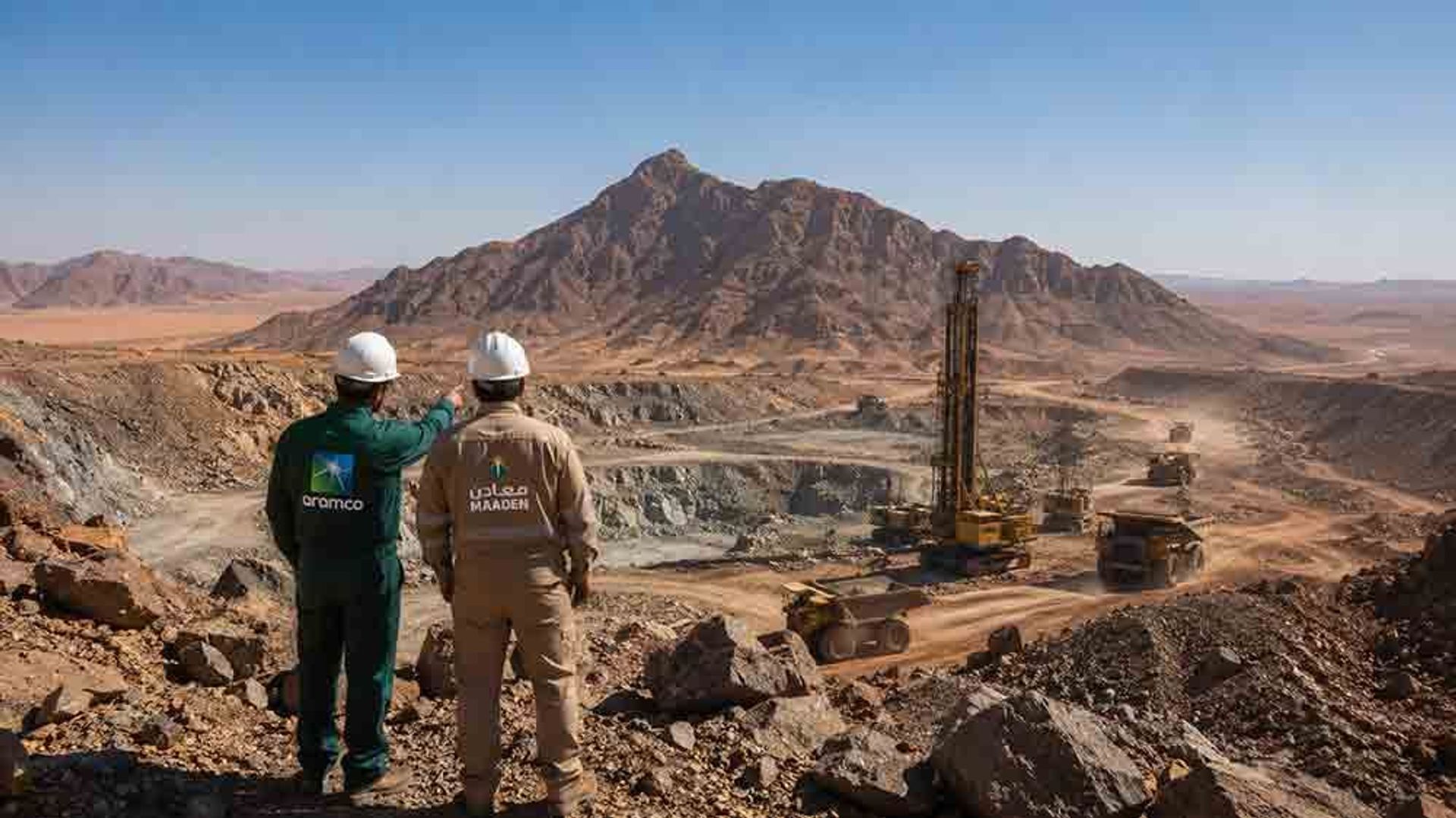
Aramco and Maaden agreed to form a joint venture, Maaden 51%, Aramco 49%, to explore Zone-4 of the Arabian Platform, about 182,000 square kilometres, close to 10% of the Kingdom's land area, for copper and other energy-transition minerals. (Arab News)
Aramco is entering the mining sector by acquiring a minority stake in a project. The company will provide the largest collection of geological and geophysical data from a single basin, compiled over ninety years of exploration. Aramco recognizes this data archive as a valuable asset.
The announcement is conditional, ownership is expected and opportunities will arise, but nothing is finalized yet. Saudi's mineral wealth is estimated at over SR9.3 trillion, while the Vision 2030 target for the mining sector is only SR240 billion. The large gap between these figures highlights the drilling that still needs to be done.
FROM THE FIELD
If your category saw a decline last week, don’t rush to offer discounts. First, assess whether you lost customers or just hit a slow period. For example, education spending rose by 62.7% even as overall spending dropped. Households are still spending, but they may be prioritizing different expenses, like school fees. Discounts might not help and could lead customers to wait for better deals. Instead, hold off on discounts and save your budget for the weeks after the school term begins.