THE BASELINE.


THE NUMBER
billion riyals paid in salaries and wages by Saudi businesses in 2025, GASTAT said this morning
Total compensation increased by 6.0% to SAR 624.1 billion. Operating revenue went up 2.3% to SAR 5,628 billion, while the gross operating surplus fell slightly by 0.1%. Pay grew more than twice as fast as revenue in the year before last week's royal order raised the Nitaqat floor to SAR 5,000, starting April 2027. One year of data does not make a trend, and the survey does not separate Saudi and non-Saudi pay. If you are planning budgets for 2027, use the new floor; the 2025 data already shows that wage growth was outpacing revenue.
THREE SIGNALS
S&P Global put the average cost of building a data centre in Saudi Arabia at $13 million per megawatt as of August, the same as North America, against $12 million in Europe and $11 million in the UAE. Consultancy Currie & Brown says data centre build costs in the Middle East could rise 10% this year as shipping disruption raises freight and insurance costs.
Build costs are now as high as those in the most expensive markets. If you’re a hyperscaler sales lead working with Saudi clients, focus your pitch on latency and data residency instead of cost.
Osamah Alfadda
The 2027 electricity tariff disclosures have reached consumer-facing companies. Burgerizzr expects about a 1% rise in annual cost of revenue. National Gypsum expects annual production costs to rise about 1%. Watani Steel expects total cost of sales to rise 1.12%. National Building & Marketing expects its subsidiary Ajeej Steel's energy costs to rise about SAR 3.5 million from 2027.
When a restaurant chain reports the same 1% as a gypsum plant, it shows that the tariff change is affecting every part of the economy that uses power, not just heavy industry.
Abdulrahman Al Mottahar
Arab Sea Information System signed an MoU with PayTabs Group to sell its entire stake in its wholly owned payments subsidiary, Arab Sea Financial Co. (SeaPay), for SAR 35 million. The MoU is valid for six months, and the deal still needs due diligence, a final agreement and regulatory approvals.
Payment licences are now being bought and sold as assets. If you’re a founder of a licensed Saudi fintech, it’s important to know what your licence is worth before deals like this SAR 35 million sale set the standard.
Abdullah Alkherb
THE MOVE
Aramco buys into its own AI supplier
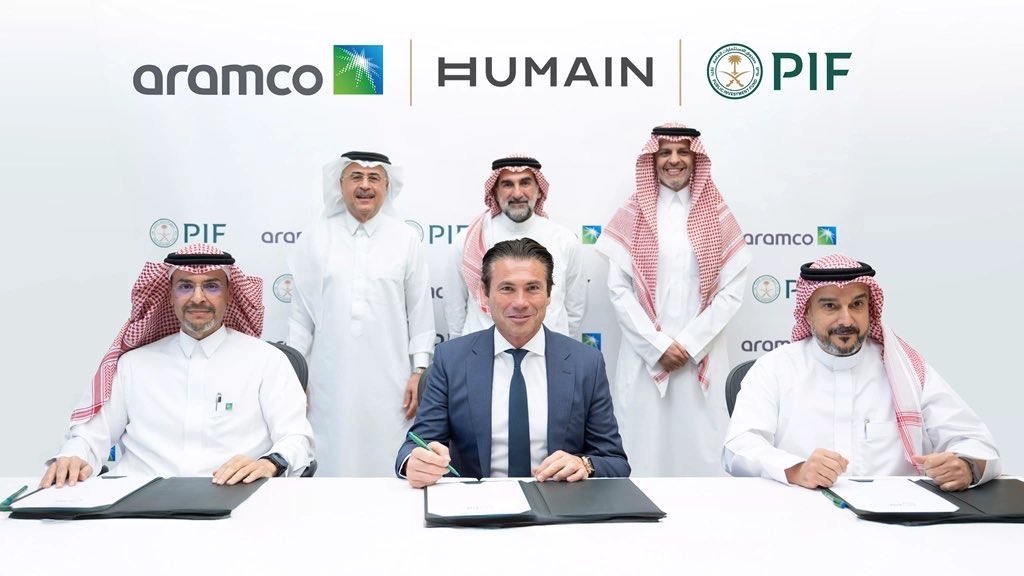
This morning PIF and Aramco said they had completed Aramco's purchase of 49% of HUMAIN, with PIF keeping 51%. Aramco puts in about SR9.9 billion ($2.6 billion) of cash in 2026, plus its own AI, computing and digital assets. HUMAIN's plan is 3 gigawatts of AI data centres by 2030. (Argaam)
The statement puts Aramco in two roles at the same time. It is both a shareholder and, through its subsidiaries, a customer of HUMAIN's infrastructure and AI services. Having a major client that owns half the supplier allows a data-centre builder to plan capacity ahead of market demand. On top of that, Aramco’s financial position is notable. Last week, reports said Aramco was close to securing a $10 billion revolving credit facility, and analysts expected its third-quarter profit to drop 17% to $27 billion.
Which Aramco assets move. The statement only mentions "AI, computing and digital assets" without specifying any. Check Aramco's Q3 report to see how the stake is recorded. If you provide IT or AI services to an Aramco digital unit, ask your contact this month if your contract is included in the assets moving to HUMAIN.
FROM THE FIELD
Last Sunday’s royal order increased the wage needed for a Saudi employee to count fully toward Nitaqat to SAR 5,000, starting 25 April 2027. Review your payroll and list all Saudi employees by their registered wage. Mark SAR 4,000 and SAR 5,000 as key thresholds. Employees earning less than SAR 4,000 will not count after April 2027, and those earning between SAR 4,000 and SAR 5,000 will only count as half. These employees often aren't included in the Nitaqat calculation, so the change may go unnoticed until your ratio shifts.